



When I was a kid, I always looked forward to November for a few reasons.
- As a born-and-raised Oregonian, November comes with rain and I live for the rainy season.
- Thanksgiving always meant a trip to my grandparents’ house for my grandma’s famous mashed potatoes.
- Three words: No School November.
Everyone in school knew that November came with holidays, grading days, and parent-teacher conferences. Those no school days add up to so many mornings spent waking up late, watching Bob Barker’s Price is Right, eating mac and cheese from the pot, and never changing out of my pajamas. Today, when I look at my kids’ school calendar, this November not much has changed.
No school days are one thing to navigate. Student attendance is an entirely different puzzle. This “No School November,” we thought we would take a closer look at the domino effect PBIS has on student attendance. It’s time to make the most of the in-school days we have this month!
The topic first came to mind after my colleague, Dr. María Reina Santiago-Rosario, presented about the domino effect she and her team experienced as part of Project ReACT — a 1-year, whole-school professional development intervention to increase racial equity in school discipline. I asked María to share her story with all of us here.
What About Attendance?
Before the pandemic, chronic absenteeism rates in the United States reached about 16% or about 8 million students nationally. The most recent attendance data from the Department of Education shows that number now sits around 28%, or more than 13 million students chronically absent from school during the 2022-23 school year.
To be chronically absent is typically defined as missing 10% or more of school for any reason.1 Excused absences, unexcused absences, out-of-school suspensions, they all count the same. If the average school year has 180 days, students who miss 18 or more days of school could be considered chronically absent…which is only about two days month.
These numbers matter because research tells us students who miss more than 10% of school are:
- Less likely to read on grade-level by third grade
- More likely to score lower on standardized tests and get suspended in middle school
- By ninth grade, chronic absenteeism is a better indicator of dropping out of high school than eighth-grade test scores2
There are multiple factors contributing to our nation’s attendance problem, which is probably why it’s so tricky to define solutions. One thing seems certain, though: School must be a place where students want to be, and it has to be a place families feel welcome…
…and isn’t that something we can address through PBIS implementation? María and her team wondered the same thing.
Research backs Maria’s story up.
According to Attendance Works, four conditions create a solid foundation for addressing so many student outcomes:
- Physical and emotional health and safety for students and teachers
- Belonging, connectedness, and support schoolwide
- Academic challenge and engagement
- Adult and student social and emotional competence3
These four conditions create spaces we know positively affect outcomes like attendance, motivation, engagement, achievement, and student well-being. By implementing equity-centered PBIS, ReACT schools prioritized the systems, practices, and data to create spaces where all students belong, feel connected, and supported.
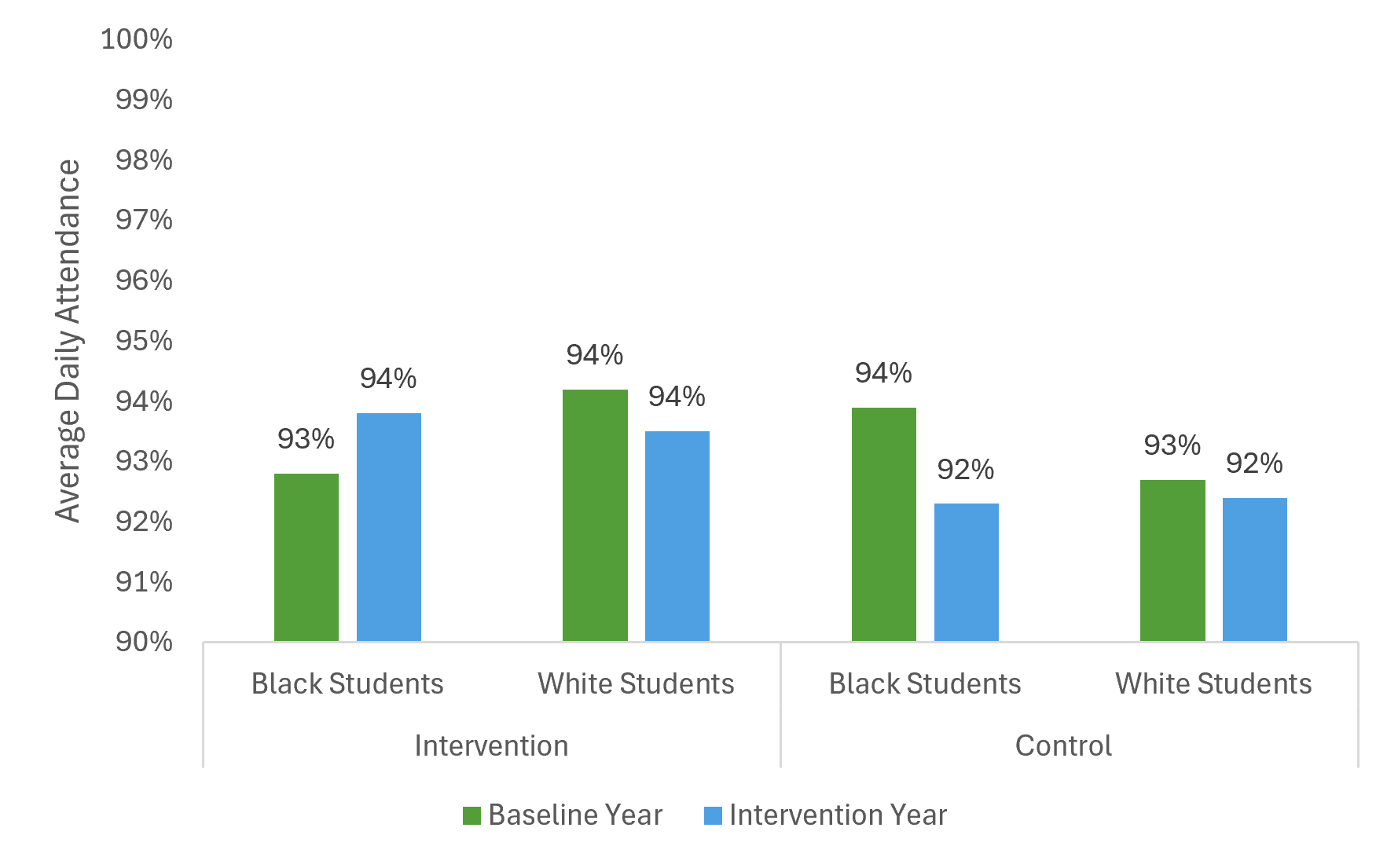
This is how improving attendance becomes a domino effect of PBIS. Your implementation targets school climate directly by establishing consistent expectations, routines, and procedures reflecting the identities and values within your schoolwide community. The school’s María and her colleagues worked with experienced this domino effect firsthand. Here are some of their key takeaways and how you can leverage your PBIS implementation to experience positive attendance outcomes, too.
Make Attendance a Priority
If attendance is something your team wants to address, the first step is to name it as a priority. For some schools participating in ReACT, attendance improved as an outcome of the good work they did to make their school discipline practices more equitable. Surprises are great. Intentional outcomes are even better. As a team, you have the opportunity to identify how large or small a priority attendance should be for your school.
If you haven’t discussed it already, add attendance as a discussion item to your team’s upcoming meeting agenda.
Review Trends Regularly
How do you know if attendance is something you should prioritize? Data of course!
This school made attendance a schoolwide priority and regularly used data to inform their action plan. Specifically, they looked for patterns. The solutions you’d put in place at Tier 1 look different than the ones you implement at Tier 2 or even Tier 3.
With referrals, we generally say students with 0-1 referral are successful with Tier 1 support alone. Students with 2-5 referrals might benefit from Tier 2 support. Students with six or more referrals often receive more individualized support plans. Attendance offers its own cut points for additional support:
- All students receive Tier 1 support related to attendance.
- Students missing 10-19% of the school days could benefit from Tier 2 support.
- Students missing 20% or more of the school days might benefit from more intensive Tier 3 support.
Don’t Forget Those Tardies
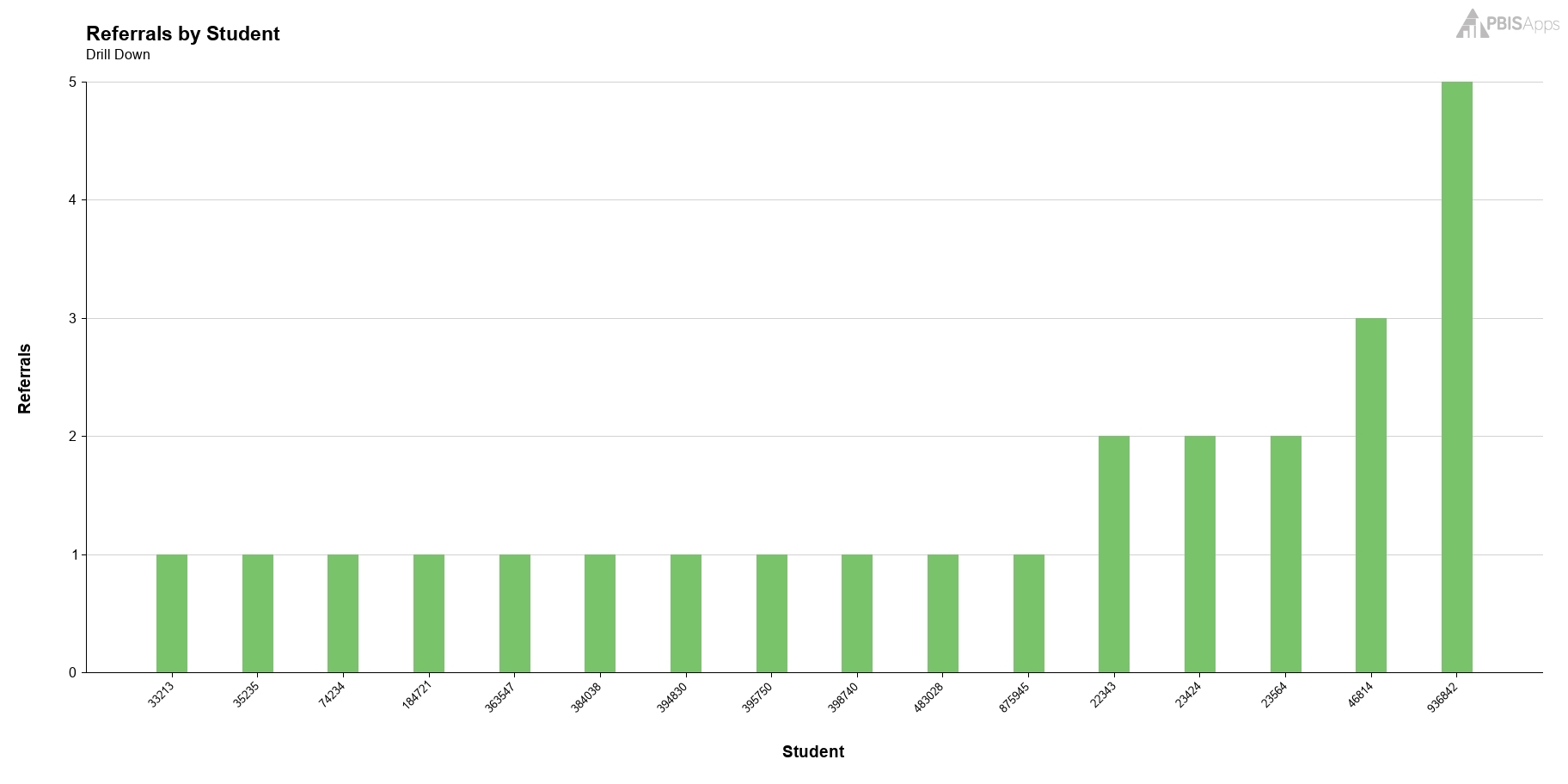
Thinking about attendance and chronic absenteeism, my mind immediately thought primarily about students missing full days of school. What about tardiness or skipping one class? Those behaviors matter in this conversation, too.
You can include your SWIS data in the conversation by going to the Drill Down and adding “Tardy” and “Skip Class” from the Behavior filter. Generate the report and switch the graph type to By Student. You now have a picture of which students might benefit from some additional support to get them to class on time.
Get Students Involved
One key feature of every school’s PBIS implementation is student engagement. The framework asks all of us to regularly solicit student perspectives and revisit our Tier 1 elements by asking students the question: How’s all this working for you? When we include student voices and perspectives in your decision-making process, they feel more empowered, more connected to their school, and start to think more critically about the systems around them.4
Your acknowledgement system is a perfect opportunity to ask students about what works best for them.
- Get their ideas for how to celebrate attendance goals schoolwide.
- Are there classroom challenges they’d think are fun?
- What are the barriers keeping them from getting to school on time?
- How can we make sure our acknowledgements don’t accidentally leave some students out?
Acknowledgements are a great way to get that strong student engagement. Bonus points if you specifically ask for perspectives from students who struggle with their attendance!
The days students spend in school matter. Every day is an opportunity to build relationships, strengthen connections, and make your school a place where all students feel welcome, supported, and ready to learn. By regularly reviewing your data, listening to student voices, and making intentional changes to your systems and practices, you can help make school a place students want to be. And sometimes, the most meaningful domino effect is simply getting more students through the door.