



The first few weeks of any school year can be a mixed bag of emotion. Excitement to meet new students. Anticipation over what each day brings. Nostalgia for the summer and the memories we made. Excitement for the coming school year, and nervousness thinking about the challenges it could bring. In our house, we call this blend of feelings "nervcited," and it generates a lot of energy!
If you're feeling this combo of emotions, too, it's super common and seemingly justified. For years, educators have been telling us their classrooms are both spaces of autonomy and joy as well as the primary source of their frustration. The RAND Corporation released its preliminary findings from the 2026 State of the American Teacher Survey — a survey exploring teacher well-being, intentions to remain in the profession, their pay, and their working conditions.1 Among other findings, this year’s survey results indicate:
- Teachers are more likely than similar working adults to experience symptoms of depression, symptoms of burnout, frequent job-related stress, and difficulty coping with that stress.
- 18% of all respondents indicate intentions to leave their job, while 23% say they plan to stay in teaching as long as they are able.
- 52% of teachers name managing student behavior as the primary source of their stress.
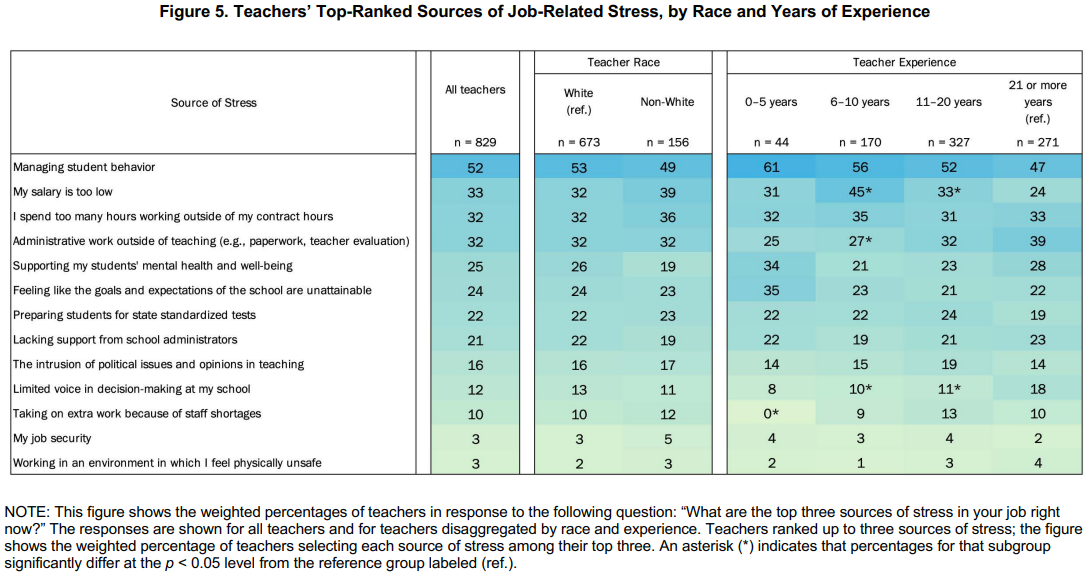
If you can relate, it seems reasonable to me that you might feel nervous about this year being a repeat performance. That stress you bring into the classroom is a big deal, not just for you — for your students, too. They notice when you're stressed and they get stressed, too.2
I know. It feels heavy. I promise I won't leave you stranded without some hope.
Our ability to understand what contributes to our stress can help us identify ways to overcome it. I want to introduce you to a framework I stumbled across that might help us zero in on some solutions: The Coping, Competence, and Context (3Cs) Theory of Teacher Stress.3
Coping, Competence, and Context Pathways
The 3Cs Theory explicitly highlights the ways coping, competence, and context work together to generate or relieve the stress you experience in the classroom.
Coping: the ways we respond to stress. Coping refers to our mindset, mindfulness, and the meditative way we breathe our way through stressful times. It also includes the problem solving you do on the fly, or the way you reach out to colleagues after a particularly tough day. Coping is all about how you take care of yourself to counteract any negative emotions that creep in.
Competence: the link between the stress you experience, and the classroom practices you implement. When stress is low, we're more inclined to acknowledge student behavior and foster positive relationships among the group. When times are more stressful, we get more reactive than proactive, deliver more consequences than acknowledgements, and inadvertently escalate student behaviors rather than de-escalate.
Context: the systems, policies, and practices contributing to our stress. Administrative involvement, testing protocols, behavioral policies, and a sense of belonging create a context that's either supportive or not.

Without a supportive context, it's challenging to handle stress in a way that de-escalates a situation. You're more likely to react negatively to student behavior than lean on proactive classroom management skills. Anytime one, two, or all three of these pathways are blocked, you'll start to feel the effects of burnout.
Knowing all of this doesn't mean we throw up our hands in defeat. In fact, when I look at that diagram, there's one pathway I know we can do something about: Competence or more specifically, classroom management practices.
All year long we’re exploring the domino effect PBIS has on the outcomes you want to improve. Our first domino is this: When you implement PBIS in the classroom, teachers report feeling more effective in their jobs and more capable of managing the behaviors happening in their class.4,5 With the competence pathway clear, teachers are less likely to experience burnout and more likely to remain in the field. So, let’s channel our collective “nervcited” energy into exploring which classroom practices can help you focus on building relationships, doing your job well, and creating a context where everyone thrives.
Core Components of Classroom-Level Practices
The Center on PBIS recently released a new practice guide all about how to leverage your schoolwide multi-tiered system of support within your classroom context. Every practice highlighted fits into one of four components:
- Promote: the practices setting students up for success and hopefully preventing mistakes.
- Teach: the specific social, emotional, behavioral, and academic skills you expect from students in your class.
- Respond: to student behavior in ways that promote social, emotional, behavioral, and academic growth.
- Decide: whether to keep doing what you’re doing or to make a change.
These components work across all three tiers of support. For now, we'll highlight some of the ways you can promote, teach, respond, and decide classroom-wide.
1. Promote: A Welcoming Space
I have a room in my house designed for the sole purpose of crafting and creating. There are lamps, fuzzy blankets, candles, and a hutch full of supplies. I walk in and I know exactly what to do there. Your classroom can be such a place. The physical space you create sets the tone for the work you want to accomplish.
- Set it up so you don't have to constantly move tables and chairs to do a daily activity.
- Design space for students to come together in groups or turn around and work independently.
- Remove distracting decorations but keep up all the posters prompting expectations and the photos reminding students they belong.
2. Promote: Authentic Connections
At the heart of PBIS implementation lives the relationships we foster among our schoolwide community. The connections you build in your classroom remind everyone they belong to the larger group. The beginning of the year is the perfect time to dive in and get to know each other.
- Communicate early with families. Let them know who you are and what they can expect from you this year. Ask them questions and invite their feedback.
- Learn how to correctly say your students’ names and welcome them at the door every day.
- Give students opportunities to get to know each other.
3. Promote: Relevant Norms
Every classroom should have a set of ground rules that establish boundaries and expectations you have for each other when you're together.
- These should always link back to the norms and expectations you've established schoolwide, but with your own classroom flavor added.
- Ask students what norms they abide by outside of school. Use their cultural experiences to shape your classroom matrix.
- Post the decided norms publicly in your room.
4. Teach: Predictable Routines
Going through security gates at the airport gives me anxiety for a few reasons, one of which is there doesn't seem to be a standard way to get through the line. It's different from airport to airport. The way you want students to participate in your classroom might look different from the routines in the room across the hall. Teaching students these routines removes any misunderstanding and ensures everyone operates from the same manual.
- The beginning of the year is the right time to teach students how to turn in assignments, participate in group discussions, and where to find extra supplies if they forgot a pencil.
- Teach routines using the “I do,” “We do,” “You do” model to make sure everyone has the opportunity to show you they know what to do.
5. Teach: What Classroom Norms Look Like
You defined the behavior matrix as a class, now what? It's time to make sure we're all on the same page about what respectful behavior looks like in your room.
- Ask students to share their own examples of what a norm looks like, sounds like, feels like.
- Ask students to share examples of what these norms don’t look, sound, or feel like.
- If your class is particularly extroverted, you could have them act them out...but only if they seem inclined. No one likes a cringey ice breaker activity.
6. Respond: Positively
I don't know about you, but I like it when someone tells me I'm doing a good job or they notice my effort when I'm doing something difficult. I bet you do, too. So do your students. Your ability to positively respond to student behavior helps you feel more capable in your job.6
- Get specific with your praise. Students shouldn’t need to take a guess at what they did well. Name the skill you noticed.
- Ask students about the ways they prefer to be acknowledged. Not everyone loves a public outpouring. Some of us prefer a subtle fist bump.
- Offer up at least five positive responses to every corrective response you make. It’s harder than you think, but the more positive things you say, the more positive behavior you’ll find happening.
7. Respond: Correctively
It's a myth that there are no consequences in PBIS. There absolutely are. Supportive, corrective feedback is incredibly important to help students identify the mistakes they make and how they can avoid them in the future.
- Keep corrections brief, calm, private, and instructionally focused.
- Use the opportunity to remind students about the norms and expectations you agreed on as a group.
- Follow the continuum of corrective responses your schoolwide team has agreed upon for classroom-managed behaviors versus the behaviors requiring administrative input.
8. Decide: What to do Next
You know we couldn't end an article without talking about data! As with your PBIS implementation schoolwide, you deserve the opportunity to evaluate whether the systems and practices you established in your classroom result in the outcomes you want to see. Data give you those insights.
- Fidelity Data: Plan some regular self-checks. Are you doing the things you said you’d do? Not sure? Check yourself during an upcoming class.
- Outcome Data: Check in with your PBIS team and ask them for a report of student behaviors happening in your classroom over a given time period. Here’s a tip: In SWIS, they can use the Drill Down Tool to get you this information. Add a filter by referrals you’ve written this school year, and they can tell you which behaviors happened, the motivating factors contributing to those behaviors, and which students might benefit from more support.
- If you still have unanswered questions, consider which data you could collect to help you make an informed decision.
The beginning of the year comes with a lot of nervcited energy. Oh yeah! Speaking of that...Remember how I promised to leave you with some hope? We covered the "nerv" part of the word; the "-cited" part is so much better!
The National Education Association asked teachers “What part of your job do you find most satisfying?”7 Can you guess their overwhelming response? It's the kids.
- “The relationships I have with students.”
- “Allowing students to openly and honestly express themselves.”
- “Being part of the story of this place.”
- “The most satisfying sound is when I hear a student say, ‘I got it!’”
In fact, it's those relationships we build across the larger schoolwide community — students, families, colleagues — that keep so many folks coming back to the classroom day after day.
As we continue our exploration of the domino effect of PBIS throughout the year, my guess is we will return again and again to the central role these relationships play. Your classroom serves as the primary place students interact with your school's PBIS implementation. By promoting the type of environment you want to create, teaching the skills your students need to be successful, responding to behavior positively and correctively, and using data to decide what to do next, you're setting up the first domino in your school's chain toward improving outcomes for everyone.
1. Steiner, E.D., Levin,P, Doan, S. (2026). “Teacher Well-Being, Pay, and Intentions to Leave in 2026:Selected Findings from the 2026 State of the American Teacher Survey.” Santa Monica, CA: RAND Corporation. https://www.rand.org/pubs/research_reports/RRA4404-2.html.
2. Oberle, E., % Schonert-Reichl, K. A. (2016). "Stress contagion in the classroom? The link between classroom teacher burnout and morning cortisol in elementary school students." Social Science & Medicine. 159, 30-37. https://doi.org/10.1016/j.socscimed.2016.04.031.
3. Herman, K. C., Reinke, W. M., & Eddy, C. L. (2020). "Advances in understanding and intervening in teacher stress and coping: The Coping-Competence-Context Theory." Journal of School Psychology, 78, 69-74.
4. Michael, D., Goutas, T., Tsigilis, N., Michaelidou, V., Gregoriadis, A.,Charalambous, V., & Vrasidas, C. (2023). "Effects of the universal positive behavioral interventions and supports on collective teacher efficacy." Psychology in the Schools, 60(9), 3188-3205.
5. Reinke, W. M., Herman,K. C., & Stormont, M. (2013). "Classroom-level positive behavior supports in schools implementing SW-PBIS: Identifying areas for enhancement." Journal of Positive Behavior Interventions, 15(1), 39-50.
6. ReinFe, W. M., Herman,K. C., & Stormont, M. (2012). "Classroom-level positive behavior supports in schools implementing SW-PBIS: Identifying areas for enhancement." Journal of Positive Behavior Interventions, 15(1), 39-50.
7. Long, C. (2022, August4). “Take this Job and Love It: Why Educators Stay.” NEA Today. https://www.nea.org/nea-today/all-news-articles/take-job-and-love-it-why-educators-stay.